


Boundary Scent Marking and Canine Bio-Mapping
One practice: we map local wild dingo groups, then set a protective scent perimeter with our resident male dingo. Free.

Rescue, rehoming, non-lethal dingo management and Aboriginal dingo guidance techniques rooted in ancient lore, respectfully on Bundjalung Country.
 Free for landownersBook scent marking
 New rescue: YindiMeet dingoes needing homes
Ways you can help

Once a dingo leaves the wild, it can’t legally be released. Standard pounds treat found pups like lost domestic pets, a system where wild dingoes rarely survive. Keep the pup safe, quiet and warm, and call us first so they get specialised care.
What to do next Volunteer
 with us
Foster a rescue, help build safe enclosures, or hand out our flyers and posters.
Ways to help ›
Adopt, foster or surrender
Dingoes aren't domestic dogs. They need guardians who understand them, and we support every match for life.
 Ready now
Pups and adultsWild-born orphans and captive-raised adults, all ready for patient, lore-based homes.
What we do
One practice: we map local wild dingo groups, then set a protective scent perimeter with our resident male dingo. Free.
Wild-born orphans, surrendered pups and adult captive-raised dingoes. We never turn a dingo away based on age, genetics or behaviour.
In home, out of home, by text, video call, or through videos and photos. Guidance to wisdom, not obedience.
Search and rescue (SAR) for missing people from Tweed Heads to Sydney, with pure Australian tracking dingoes and Aboriginal trackers.
Dingoes are extraordinary escape artists. Fencing advice and donated materials for carers in need, plus education for schools, community groups and private functions.
An ideal dingo guardian has a mindset rooted in conservation, extreme patience and adaptability, not a wish for a traditional, obedient pet. Eight questions to see if a dingo suits your life, before you foster or adopt.
Dingoes are independent primitive animals. They need partnership, not dominance, a calm attitude to chewed furniture and dug-up yards, and a "Fort Knox" home: 1.8m+ fencing, dig-proof footings or a climb-proof run. Every dingo is different, so we’ll talk through the right setup for yours by phone or email.
Question 1 of 8 · Location
Learn about dingoes
 Culture
Dingo kinship: family units, not packs
Why dingoes have skin names, roles and responsibilities, and what that means for how we care for them.
Read the guide ›
 Guardians
Living with a companion dingo
Leads, hand-feeding, enclosures and a raw diet.
Read ›
 Landowners
Wild dingoes and your property
Simple ways to make your place dingo safe, without harm.
Read ›
Our impact
Every dingo kept out of harm's way, and every family, landowner and ranger who now understands them.
"No visits yesterday at all during the day. I feel this is very positive."
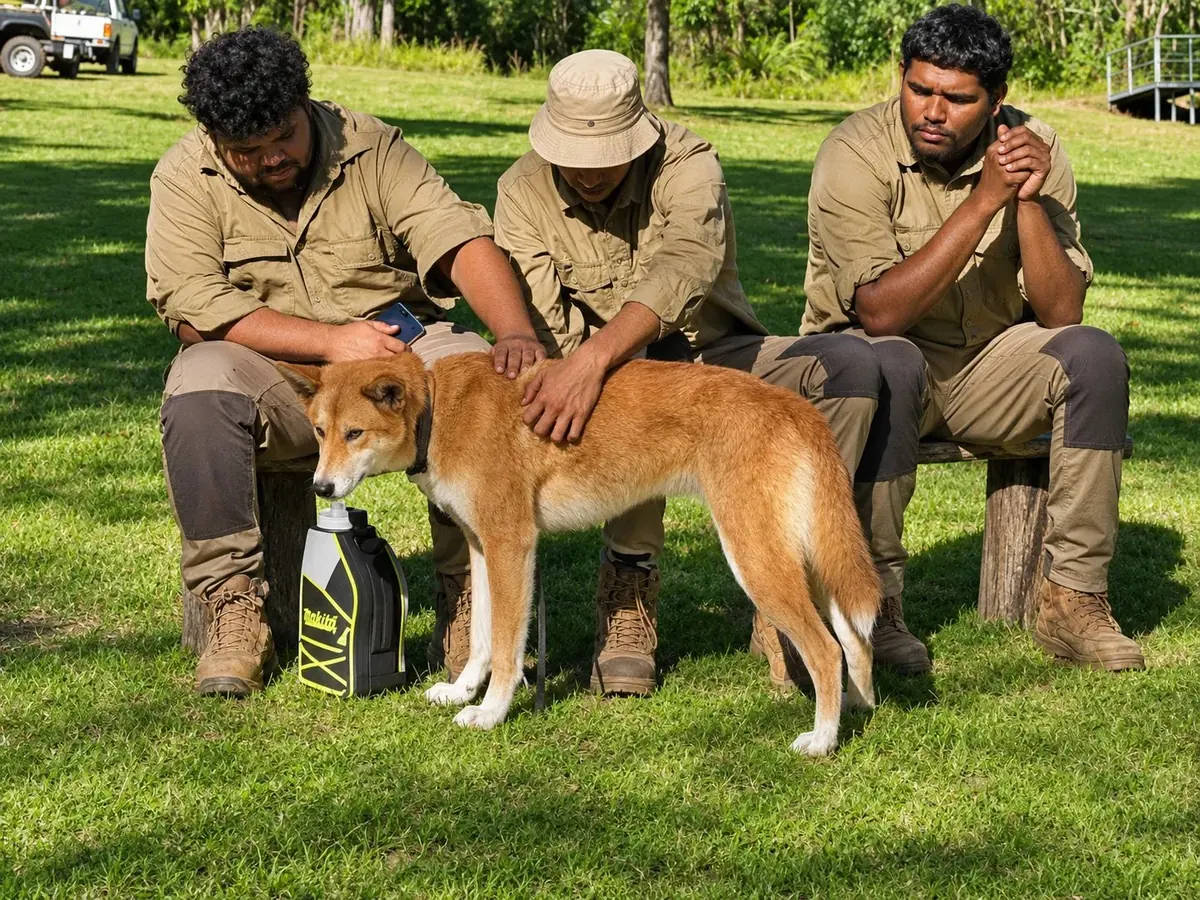
On Country
Dingo education sessions with the Minyumai Rangers
Sharing dingo knowledge with the Aboriginal rangers who care for the Minyumai Indigenous Protected Area, on Bandjalang Country near Evans Head, NSW.
Working alongside
Dingo Genetics Research, UNSW ● National First Nations Dingo Forum ● Aboriginal and Torres Strait Islander Legal Service ● Fellow dingo rescues, sharing DNA samples for national conservation Dingoes looking
 Wild dingoes
Question {{qNum}} of {{qTotal}} · {{topic}}
{{resultText}}
{{p}}
Living with a dingo companion comes with unique responsibilities. A bond with a dingo must be built on a 100% no-hitting policy. Dingoes are deeply sensitive, and hitting can break their trust, sometimes for good.
No bond with a dingo succeeds without trust. With a dingo, trust is the highest form of currency.
